
The Hidden Half of Health and Agriculture
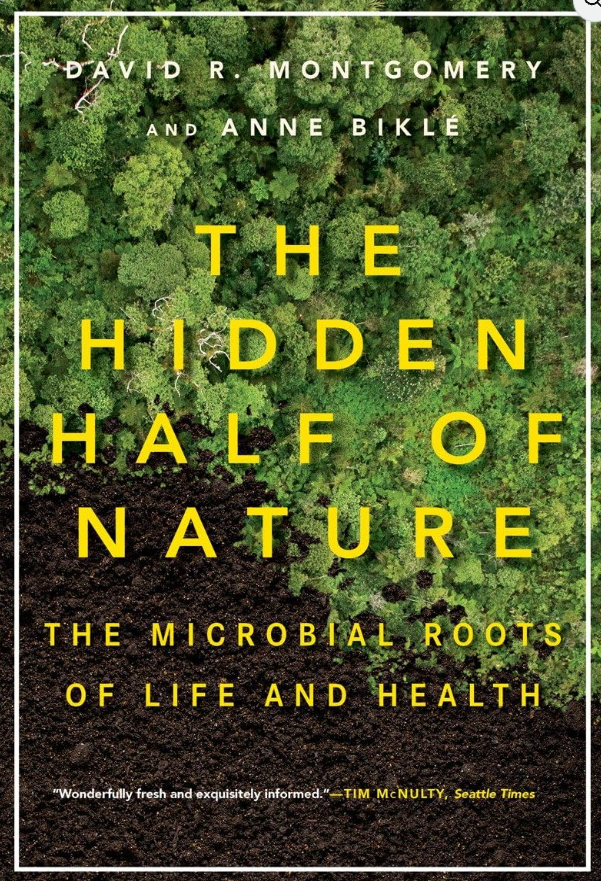
For the Stoa agriculture debate topic, and for the NSDA (public school) health insurance topic, understanding the Hidden Half of Nature is key. The invisible half of nature are the microbes underground, underwater, and in our bodies.
David Montgomery and Anne Bikle subtitle their 2016 book: The Microbial Roots of Life and Health. Trillions of microbes in the soil support healthy and nutrient-dense plants that in turn support healthy animals and people.
Agricultural policies in the US (and in the EU) are relevant for developing and protecting the microbial communities deep in the soil that are a precondition of nutrient-dense crops and animals.
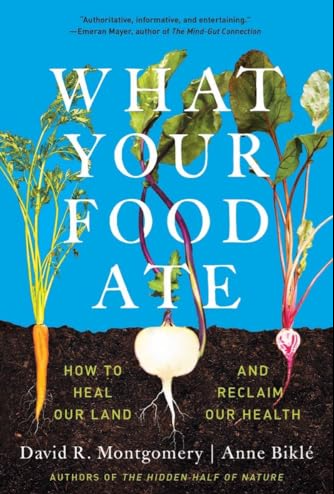
For human health 40-100 trillion microbes (bacteria, viruses, and fungi) in our gut help digest our food and manage our immune systems. David Montgomery and Anne Bikle also authored What Your Food Ate: How to Restore Our Land and Reclaim Our Health (2023).
Healthy soil rich with thriving microbes bring needed minerals and nutrients to plants in exchange for carbohydrates exuded (released) from plant roots.
Sun and water are, of course, critical for farms, orchards, and ranches, so regular rain and irrigation where needed. But rain is rarely regular. Heavy rains alternate with sometimes long periods without rain. That’s why healthy soils are open, with deep roots to absorb and hold water from rains. Soils with tall plants better absorb rainwater, even six inches or more, directly by plants, their roots, and through more open soil.
Regenerative ranching enterprises rely on multi-paddock grazing, shown in many Carbon Cowboys videos, with cattle moving from paddock to paddock, consuming grass and forbs and heading on before consuming too much (causing too much damage). Plants and forbs consumed by the cows exude from their roots carbohydrates to feed and signal microbes in the soil for minerals required to repair the damage. Cows both break up the soil with their “hoof impact” and deposit natural fertilizer before they move on.
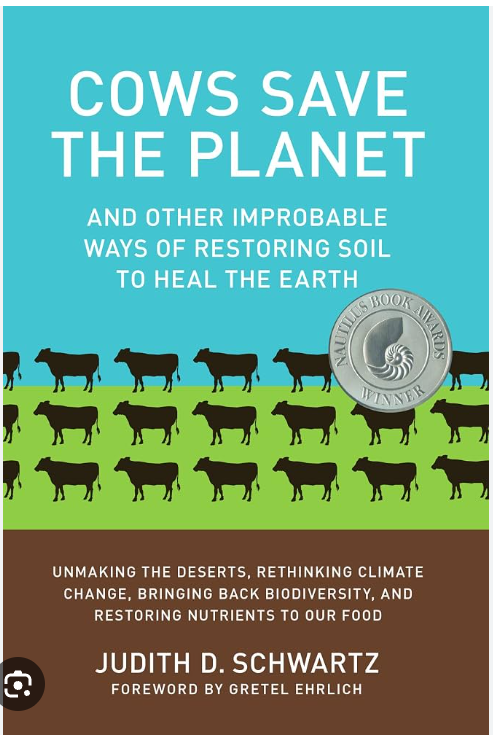
Can Cows Save the Planet?
In Cows Save the Planet, journalist Judith D. Schwartz looks at soil as a crucible for our many overlapping environmental, economic, and social crises.
Schwartz reveals that for many of these problems—climate change, desertification, biodiversity loss, droughts, floods, wildfires, rural poverty, malnutrition, and obesity—there are positive, alternative scenarios to the degradation and devastation we face. In each case, our ability to turn these crises into opportunities depends on how we treat the soil.
Looking online, fully regenerative ranching is now a small percentage of cattle production. But various regenerative practices are expanding:
Thousands of traditional ranchers utilize partial regenerative methods—such as using cover crops for grazing or managed rotational fencing—but only a small fraction have transitioned their business models completely.
Recent federal policies (in the US and EU) signal support for regenerative agriculture. Senate Agriculture Committee Releases Draft Text for 2026 Farm Bill (Holland and Knight, June 26, 2026) includes:
President Trump and U.S. Department of Agriculture Secretary Brooke Rollins also announced initiatives to promote the use of regenerative agriculture, and Secretary Rollins announced a final rule will be issued on regenerative feedstock.
Critics say this and earlier Executive Orders are not enough. See Trump Administration Launches Regenerative Agriculture Pilot (Civil Eats, December 10, 2025):
The Trump administration will direct $700 million into a voluntary regenerative agriculture pilot program that builds on existing conservation programs, top health and agriculture officials announced Wednesday.
How can the the federal government, through the USDA, know which of many proposed regenerative agriculture projects are worth funding? How much effort will be required to apply for, manage, and report on these grants? Cutting federal subsidies for major crops that each year seem to struggle with low price would encourage more mainstream farmers to explore regenerative alternatives. Shifting farming practices is challenging, exploring ways to improve soils, crops, and animals.
Countering the regenerative claims is this The Breakthrough Institute post with mainstream farming and nutrition views (and links to mainstream studies): Mythbusting MAHA’s claims about food and farming:
Robert F. Kennedy Jr. and his HHS are on a public health crusade that is largely a distraction (The Breakthrough Institute, April 7, 2025).
These contrasting claims and studies across agricultural practices and nutrition studies make for engaging and healthy life and death debates.
America’s ongoing epidemic of cardiovascular disease, obesity, diabetes, anxiety and depression all develop downstream from poor metabolic health. It’s not unreasonable to consider that people are suffering from the food they eat, and from farming and food industry practices that deliver low-nutrition meals.