
Welfare for Farmers Creates Dependency
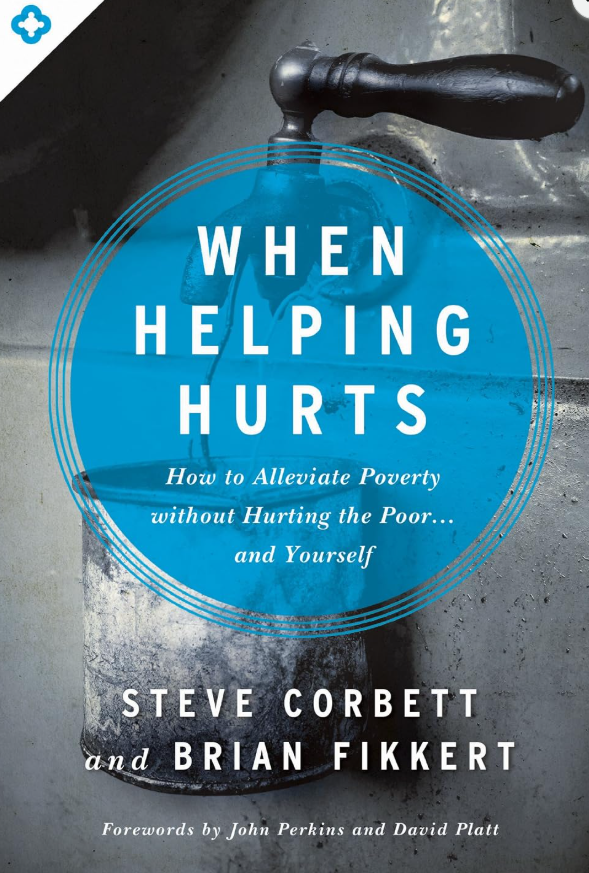
Critics of welfare for the poor argue that too much “helping” creates dependency. Books like When Helping Hurts: How to Alleviate Poverty Without Hurting the Poor . . . and Yourself explain that poverty is complex and not solved by government or private sector aid.
In much the same way, farming is complex. Federal (and private sector) farm aid programs feed the problems rather than resolve them.
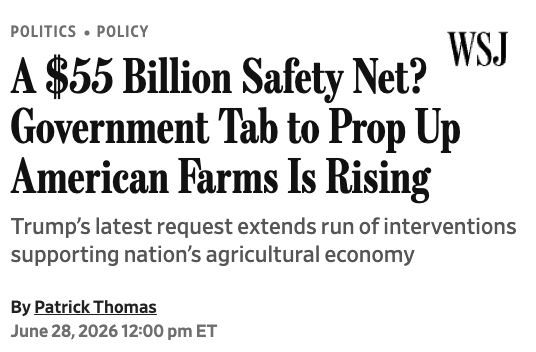
A $55 Billion Safety Net? Government Tab to Prop Up American Farms Is Rising (WSJ, June 28, 2026) outlines distortions and damage federal agricultural programs continue to create for farmers (not to mention adding debt for future taxpayers).
Information about supply and demand for agricultural goods is encapsulated in prices. Corn and soy supply is up the WSJ reports:
Farmers growing corn and soybeans had one of the largest harvests in history last year and are on pace for another bumper crop this growing season, according to the USDA.
No surprise that with supply up, prices have fallen:
The harvests have fueled a grain glut, pushing commodity prices down and farm income along with it.
Falling prices signal farmers to cut back on production. Lower prices signal corn and soybean farmers to reduce planting corn and soybeans until prices recover.
But that won’t happen if the federal government continues to fund more planting and support prices with another $55 billion in welfare payments and programs for farmers.
The WSJ article ends with comments from an older farmer:
Many farmers don’t want more government checks but can’t turn them down either, said Chuck Read, a fifth-generation farmer near Princeton, Ill.
Continued government support has motivated poor savings and spending habits among older farmers who should be saving during times when commodity prices are high, said Read, 74 years old.
“I think they’ve hurt us more than they’ve helped us,” he said about government bailouts to farmers. “Even though farm country is pro-Trump still, this is socialism stuff.”