Most North, South, and Central Americans face everyday economic challenges: costs increase for housing, health, food, energy, and transportation. For some reason people living in the United States and Canada earn on average far more and are wealthier than most living in Central and South America. Why is that? For Stoa league debaters, what USFG reforms could best improve safety and living standards across the Americas?
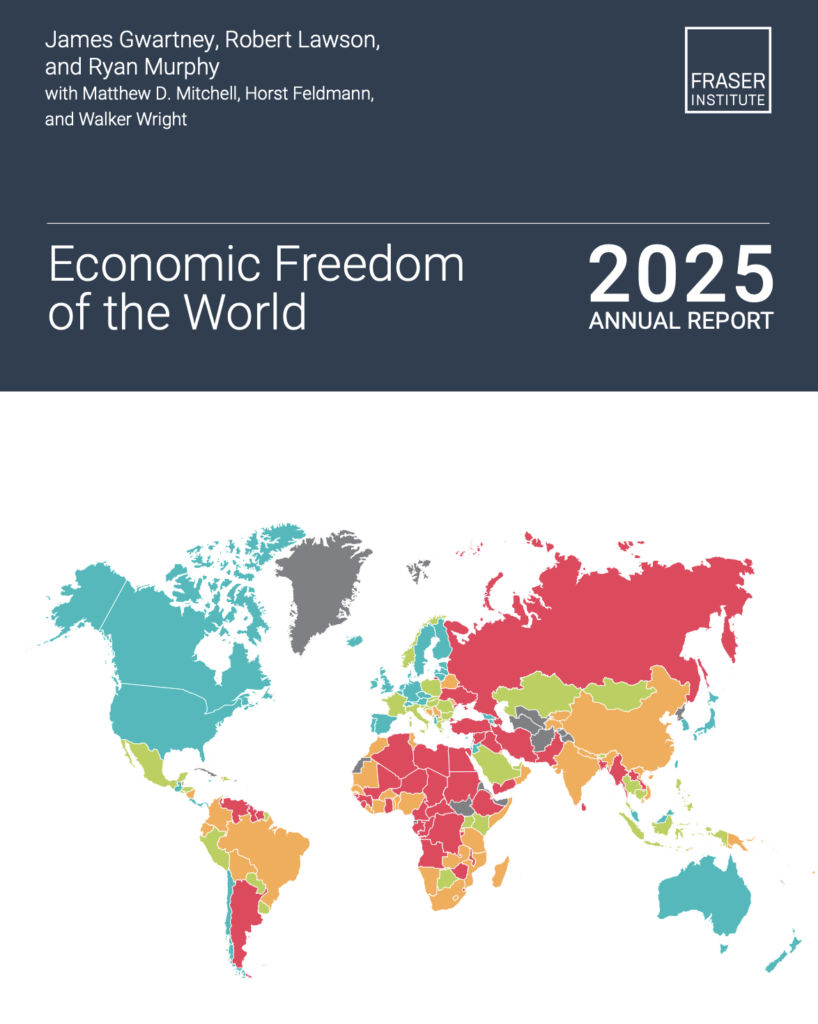
The Frasier Institutes 2025 Economic Freedom of the World report outlines policy reform paths to prosperity. For example, if higher paying jobs, better housing, health, food, energy, transportation and education are key to prosperity, what reforms open those pathway doors?
Lessons for the US from South America Consider housing. Ending rent controls in Buenos Aires dramatically quickly increased available apartments and reduced rental costs. Cumbersome regulations led landlords to withhold rental units, and they flooded back on the market with deregulation:
Argentina, under President Javier Milei, ended its strict rent control laws in December 2023, leading to a significant increase in rental supply and a decrease in real rental prices in Buenos Aires, as landlords returned properties to the market after years of withdrawal due to restrictive policies, although some tenants face steep immediate rent hikes. This deregulation aimed to free the market, causing a surge in available units and stabilizing rents… (AI Overview, Jan 4, 2026)
Much the same would happen in San Francisco and New York City if their complex rent control and stabilization regulations were ended. Rents would go up for some, both rich and poor, and thousands of new and existing apartments would soon be available for rent. Other regulations make both restoring old and building new apartments too costly. Both in cities and suburbs, new technologies allow new housing to be constructed with far less expense. Consider this ten story building in China, assembled in a day:
A real estate developer in central China’s Hunan province constructed a 10-storey residential building in 28 hours and 45 minutes. Each flat is prefabricated at their factory and then transported to the site. The building was constructed using stainless steel slabs which are designed to resist earthquakes and typhoons, according to the company.
There is no magic to modular housing. Just economic freedom. Factories lower costs for making cars, computers, Small Modular Reactors (SME), and a thousand other goods. Boxable is one of dozens of innovative modular home companies. Other companies use large 3-D printers to make inexpensive housing. Modular and 3-D printed housing could quickly build millions of new homes in Venezuela and across Central and South America. And also across the US and Canada.
The USFG has a Housing and Urban Development (HUD) administration promoting “green” (but not manufactured) housing, which raises instead of allower lower costs in the US. HUD promotes similar policies in Central and South America. Google’s AI Overview says:
… the U.S. Department of Housing and Urban Development (HUD) has actively pursued green policies to promote energy efficiency, reduce carbon emissions, and enhance climate resilience in housing.
Energy efficiency and “climate resilience” come at a cost. Who should decide the trade offs between costs and benefits. And why should HUD have any influence on Central and South America housing?
Housing and Urban Development (HUD) policies in South America focus on inclusive, sustainable cities by tackling informality, upgrading slums, boosting affordable housing, and integrating climate resilience, often through Inter-American Development Bank (IDB) and UN-Habitat support… (AI Overview drawing from this Nov. 28, 2025 Economic Commission for Latin America (ECLA) paper)
Past Economic Thinking posts have noted USFG policies that promote energy and ranching policies for Central and South American countries. These regulations have good intentions, but raise costs and slow economic development. Notes below on USFG policies for Central and South American agriculture, education, health care policies and regulations.
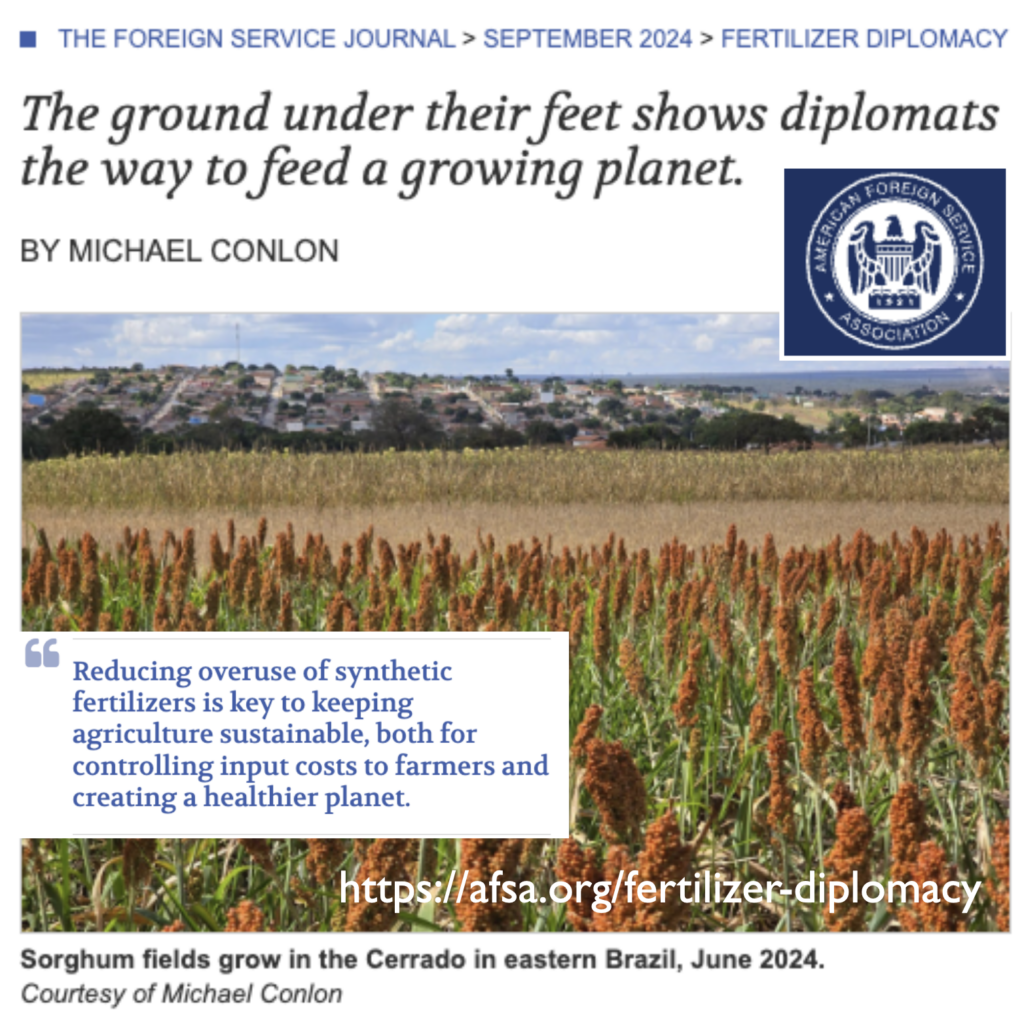
One important piece of this challenge is already being addressed by diplomats in the United States and Brazil: developing fertilizers that are more effective and sustainable.
And USDA funding Fertilize Smarter for Brazil, Columbia and other countries:
…will assess the needs and opportunities for addressing each of the 4Rs within a framework that improves fertilizer-use efficiency, soil health, and food security, while also reducing greenhouse gas emissions.
The Department of State’s Office of the Special Envoy for Climate is supporting F4L with a $1.2 million grant under the U.S. Department of Agriculture’s (USDA) Fertilize Right Initiative. …
• Housing (again, the challenge: these programs increase regulations and raise housing costs):
The U.S. government (USFG) promotes inclusive sustainable housing in South America primarily through collaborative initiatives within the Cities Forward program and broader economic frameworks like the Americas Partnership for Economic Prosperity (APEP), often working with multilateral development banks like the Inter-American Development Bank (IDB). [And] The USFG generally supports sustainable urban development and climate resilience rather than direct, independent housing construction projects.(AI Overview)
Brazil has one of the cleanest generation matrices in the world and supplies electricity domestically to over 90 million residential, commercial, and industrial users, surpassing the combined power output of all other South American nations. Further grid efficiency and resilience are among Brazil’s highest priorities in the sector, contributing to the country’s decarbonization goals.
In recent months, the homeschool freedom movement in Brazil entered a significant new phase. I received several reports in March from families and leaders in Brazil about an increase in judicial pressure against homeschooling families.
While the pressure is not new, it does appear that the frequency and intensity may be increasing. We have reports of children being ordered to public school, parents having their bank accounts frozen, and families being intimidated with police cars parked in front of their homes.
Consider the Act for Early Years program in Brazil. Early years breakthrough as Brazil launches bold national childhood policy (August 6, 2025). International funding (including from US agencies) provides support. Developing a national database of children allows the Brazilian government to pursue “legally ambiguous” homeschool families:
The new National Integrated Policy for Early Childhood will transform the lives of millions of children and strengthen Brazil’s role as a global leader in tackling inequality from the start of life.
The announcement comes after months of tireless advocacy by Act For Early Years partners in Brazil. A single national database will be created and agencies dealing with education, health, social assistance and security will work together to meet the specific needs of each child and their families.
And from AI Overview:
Homeschooling in Brazil is a legally ambiguous, debated practice, with current interpretations often leaning towards it being disallowed unless regulated, requiring enrollment in a school, following its curriculum, and regular evaluations, while the “Act for Early Years” (Act for Early Years campaign) advocates for strong, government-supported early childhood development policies for all children, a separate but linked push for quality care, distinct from homeschooling, to ensure foundational learning and rights for Brazil’s youngest, a cause championed by President Lula’s government via a new National Integrated Policy for Early Childhood.
The outlook changed, however, when Brazil elected Luiz Inácio Lula da Silva as the new president in 2022. The homeschooling bill had advanced through one chamber of the legislature, but its progress stopped after the election, and there is little hope of more before the next election in a couple of years.
The new Brazilian government also considered implementing a national action plan to eliminate any educational freedom, including homeschooling. Any doubts one might have had regarding the ideological position of this Brazilian administration were removed when the president appointed Flávio Dino to the Supreme Court.
USFG foreign aid programs come in all kinds and sizes and provide welcome support for many low-income families in Central and South America. But many of these programs also try to guide development and are shaped by planners in the US and other countries. William Easterly is skeptical that top-down planners can match progress from “the searchers”: the entrepreneurs and enterprises working to solve local challenges. from the ground up. Easterly’s latest book is: Violent Saviors: The West’s Conquest of the Rest
In Violent Saviors, renowned economist William Easterly examines how the demand for agency has always been at the heart of debates on development. Spanning nearly four centuries of global history, Easterly argues that commerce, rather than conquest, could meet the need for equal rights as well as the need for prosperity. Looking to the liberal economic ideas of thinkers like Adam Smith, Milton Friedman, and Amartya Sen, Easterly shows how the surge in global trade has given agency to billions of people for the first time.
Narrating the long debate between conquest and commerce, Easterly offers a new and urgent perspective on global economics: the demands for agency, dignity, and respect must be at the center of the global fight against poverty.