
Ronald Reagan/Leonard Read Aff. Case: Push the Button! Updated for agriculture & health insurance
Should debaters call for Congress to “push the button” and end federal agriculture programs (Stoa topic)? Or to end federal health insurance programs (UIL/NSDA topic)? Or maybe end SNAP, at the intersection of agriculture and health/welfare programs and costing $300 billion a year. Critics say SNAP promotes unhealthy food, contributing to behavior, health, and insurance costs).
The earlier version of this post drew from a Ronald Reagan radio address to recommended ending outdated and misguided federal energy policies. In the 1970s–fifty years ago now– The Energy Crisis jolted the U.S. economy causing shortages and long lines at gas stations. In response, new federal energy policies and programs were passed. As the decades passed, layer upon layer of new federal energy programs and regulations were added, then extended and expanded.
That energy crisis is decades past, and technology advances in oil and natural gas drilling yielded booming supplies allowing U.S. to now be a major oil and natural gas exporter.
So maybe it is time (or past time) to “push the button” to end the dense and expensive thicket of federal energy market interventions (including subsidies and mandates for ethanol, electric vehicles, plus Renewable Fuel and Fuel Economy Standards).
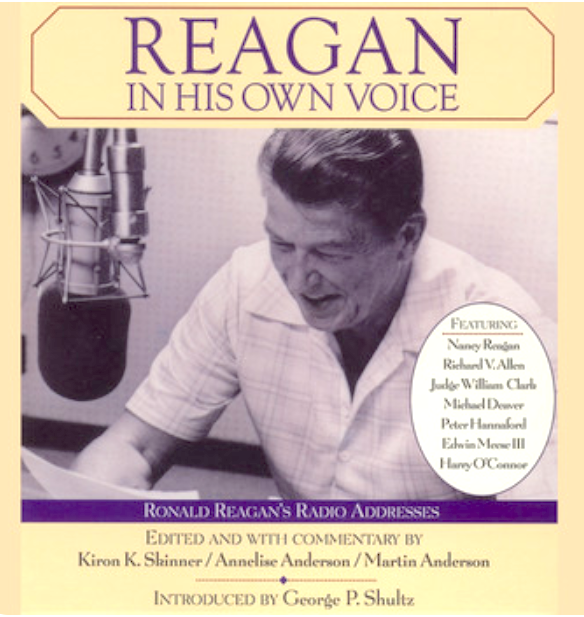
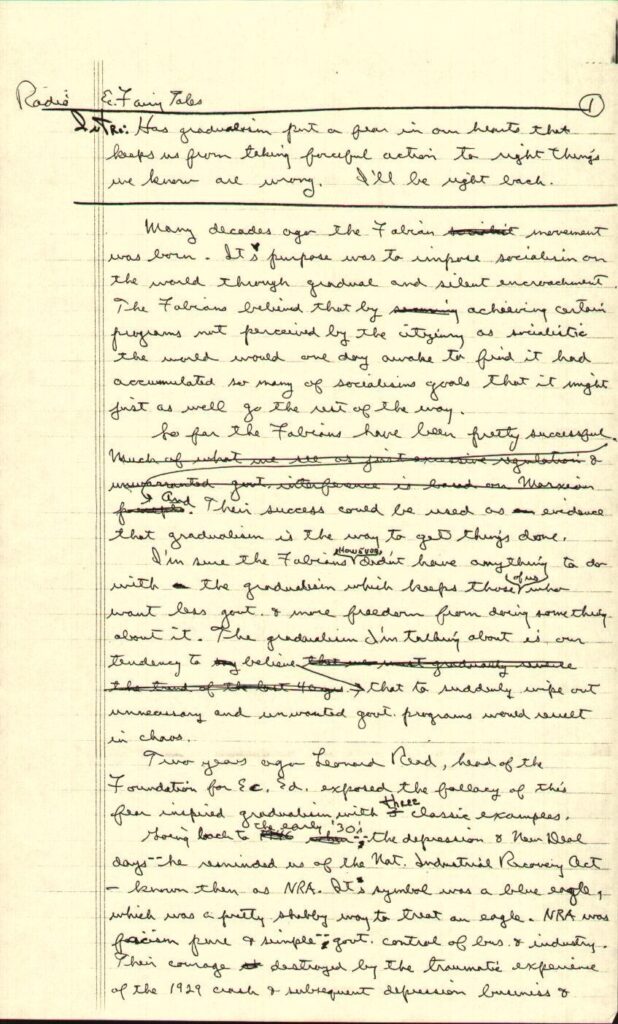
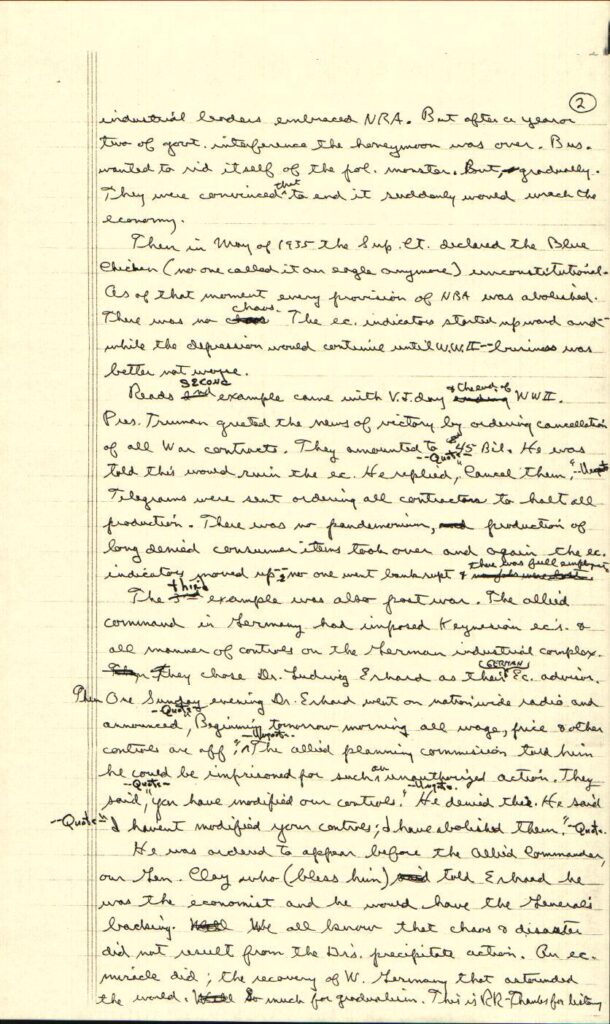
Ronald Reagan, before he ran for President, had a popular radio program featuring three-minute addresses on key public policy issues. Some were written by speechwriters, and others Reagan wrote himself. Below are the two pages, in Reagan’s handwriting, of one address titled Economic Fairy Tales (not included in the collection, link to mp3).
Drawing from an article by Foundation for Economic Education founder Leonard Read, Reagan offered three historical examples of major federal programs that were suddenly abolished, against the wishes of both government and business advisors.
Chaos and economic downturns were predicted if these programs were ended too quickly. But instead, economic adjustments were rapid and ending these failed programs helped and healed the economy. Click here for the audio for Economic Fairy Tales.
If alive today, Leonard Read and Ronald Reagan would likely advocate similar reforms for current U.S. agriculture and health insurance programs and policies. Push the button!
Could debaters run a Ronald Reagan/Leonard Read push-the-button affirmative? We can’t undo the past but we can, debaters can, lift the dead hand of the state from today’s Constitutional republic. (“Legislative fiat” means proposed policies become law when judges vote affirmative.)
Business leaders are fearful of sudden policy changes (regime uncertainty). If voters could push a button to sunset all federal agriculture and health insurance programs and policies, would they? And if voters (i.e. debate judges) would, politicians could as well.
For anyone fearful of economic dislocation caused by from ending agriculture policies, Congress can simply reinstate policies and programs deemed important.
Subsidies and tax reductions for agriculture and health insurance would also sunset, but, again, Congress can vote to renew these or any other subsidies thought essential.
“Nothing lasts longer than a temporary government program.”
― Ronald Reagan
After serving as governor of California but before running for president, Ronald Reagan recorded over a thousand radio broadcasts, most focused on reducing the size and scope of government:
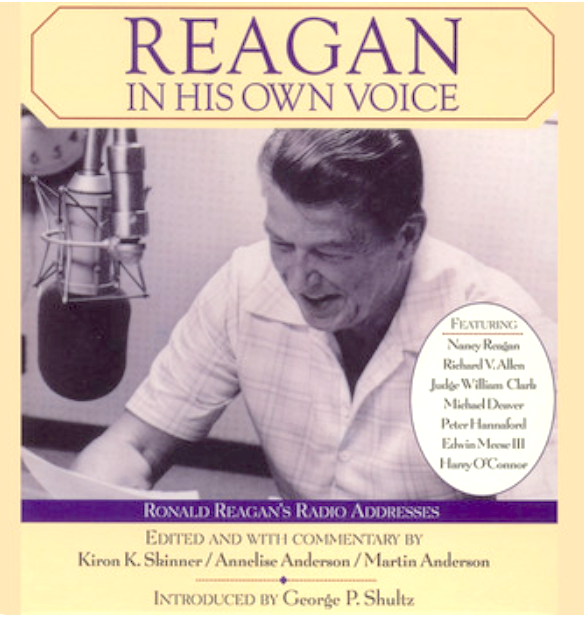
Reagan gave 1,027 of these addresses to an audience of 20 to 30 million listeners each week, interrupted only by his initial run for the White House in 1976. A researcher visiting the Reagan Library found that the former governor wrote at least 679 of the commentaries in longhand on yellow legal pads. The manuscripts are currently archived at the Ronald Reagan Presidential Library in California.Ronald Reagan Radio Broadcasts (1976-1979), (National Registry, 2007)
Researchers found the yellow legal pages with Economic Fairy Tales in Reagan’s handwriting, including edits (see images above). In Economic Fairy Tales (link to MP3 audio), three historical episodes are given, drawn from an essay by Leonard Read, founder and then president of the Foundation for Economic Education.
Earlier essay with further details: Economic Fairy Tales and False Economic Stability.
For pathway to end federal agriculture programs and policies, see this Google AI overview of Cato Institute proposals (with links):
Core Reform Proposals
- Phase Out Farm Subsidies: Gradually
eliminate federal commodity subsidies, crop
insurance backing, and disaster aid programs, arguing that farming is no riskier than other private industries. [1, 2] - Eliminate Trade Protections: Remove tariffs, import quotas, and protectionist trade barriers on agricultural goods, such as countercyclical fertilizer duties. [1, 2]
- Repeal Mandates and Price Supports: End federal sugar programs, corn-ethanol mandates, and mandatory commodity checkoff programs. [1, 2]
- Streamline the USDA: Downsize or restructure the U.S. Department of Agriculture (USDA), separating nutrition programs like SNAP from … farm commodity policy. [1, 2]
- Model After New Zealand: Point to New Zealand’s 1984 reform—which eliminated nearly all farm subsidies and market controls—as a benchmark for increasing long-term productivity and competitiveness. [1, 2]
For federal Standard of Care reforms for federal health care and insurance (so Medicaid, Medicare, Veterans, ACA), see posts at EconomicThinking.substack.com and on Economic Thinking health. And see Nina Teicholz’ report on OwnaHealth care for South Bronx Medicaid patients: For Richer, for Poorer: Low-Carb Diets Work for All Incomes (Medscape, July 17, 2024).