
IP, Agriculture, Infrastructure: Notes on New Resolutions
Here are Stoa policy debate resolution choices: intellectual property, infrastructure, or agriculture. Resolution wording and overview here. Economic principles and history provide insights for economic freedom reforms.
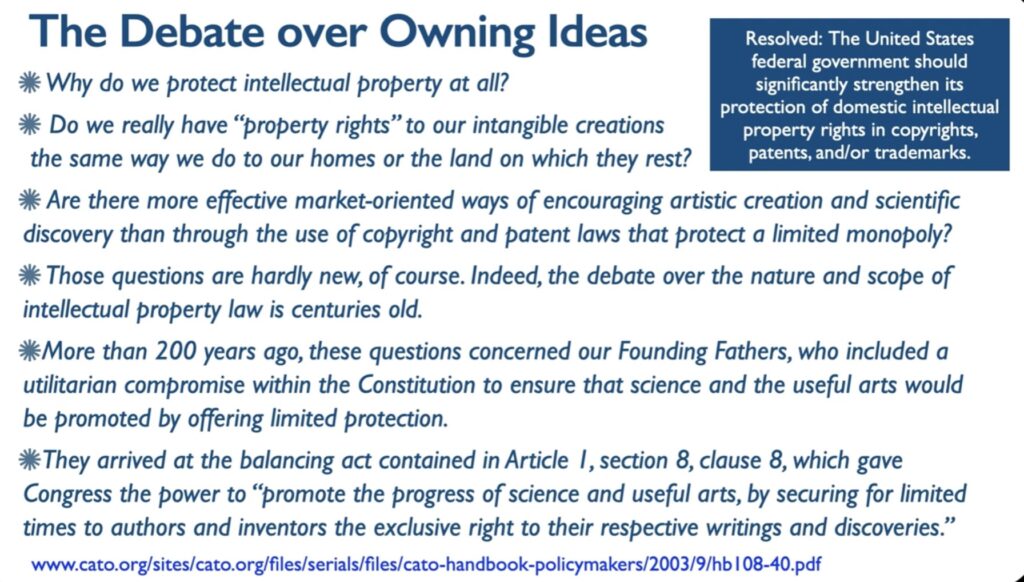
Reforming IP
Economic Thinking talks on IP reform (from past NSDA topic) here on YouTube:
• Intellectual Property Policy topic, economics of, Part one
• Intellectual Property, economics of, Two
Articles: History of IP:
• The History of Intellectual Property by Terence Kealey (from Who Owns Broccoli...)
• Who Owns Broccoli? Intellectual Property Rights in a Liberal Context (Ideas on Liberty 9, 2011)
Also, homeschool debate alumni Lawsen Mansell calls for clearing “patent thickets”: Reforms targeting “patent thickets” would speed up the arrival of lower-cost drugs (Niskanen Center July 18, 2024)
• Monument 2024 discussion of “patent thickets” for recent health care topic: Niskanen Center – Healthcare Analysis with Lawson Mansell.
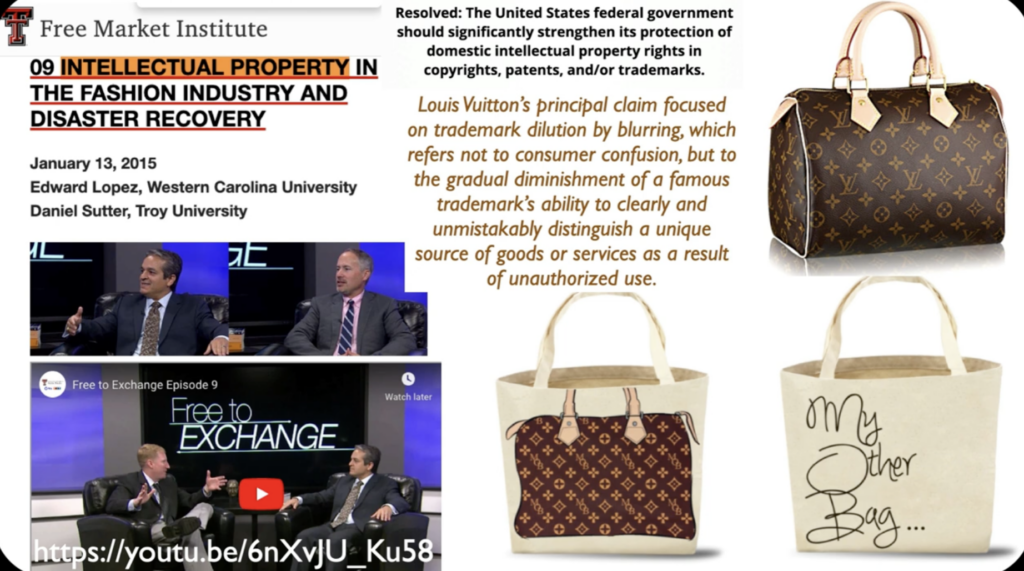
The fashion industry thrives without copyright protection. How? Economist Edward Lopez discusses: Intellectual Property and Fashion (UFM, 2011) and Free to Exchange Episode 9: Texas Tech Media (Jan 13, 2015)
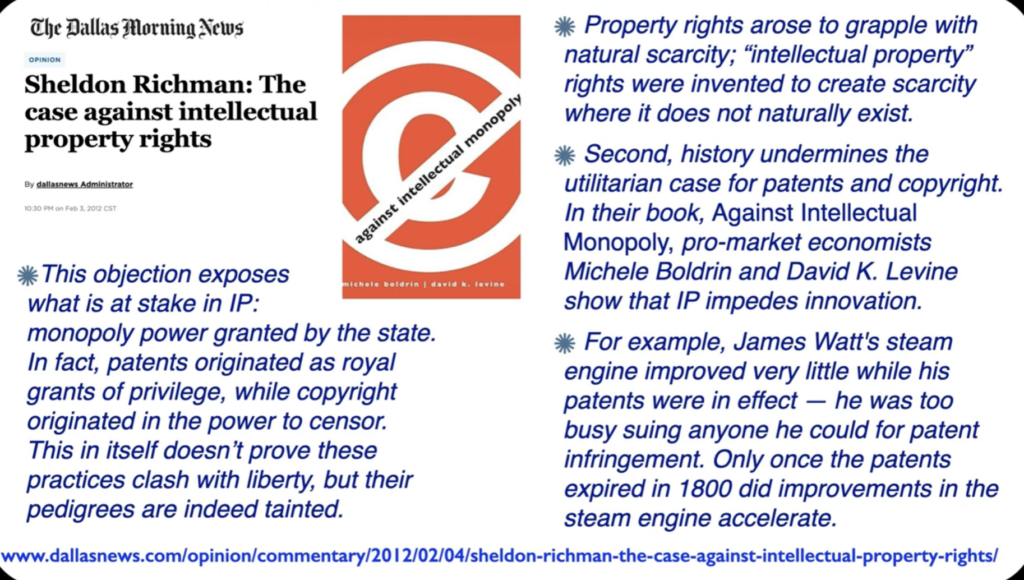
• Behind paywall: Sheldon Richman: The case against intellectual property Dallas News Feb 3, 2012 — Physical property rights grapple with natural scarcity; IP rights create scarcity where it doesn’t naturally exist.
Cato Institute’s Cato Unbound discussion: “When Corporations Hate Markes” include this reply “Owning Ideas Means Owning People”:
In defense of intellectual property, Lee notes that “Copyright and patent protections have existed since the beginning of the republic, and if properly calibrated they can (as the founders put it) promote the progress of science and the useful arts.” That they have existed since the beginning of the republic is true, but not a compelling argument for their legitimacy. (Slavery existed for the first century of the republic also.) As for their being needed to promote “science and the useful arts,” even if this were true it wouldn’t justify the violation of liberty involved – but it is doubtful that it is true, given that most scientific and artistic progress throughout history was accomplished without intellectual property protections, and in many cases was in fact possible only because there were no such protections (as inventions built on previous inventions, and artworks on previous artworks). The protectionist argument that intellectual innovators won’t have sufficient incentive to create unless they’re protected from competition doesn’t seem to hold up historically.
Notes on Agriculture Policy Reforms
Ending most federal crop subsidies is what most economists would recomment. A five-year phase out would be one approach (whereupon in CX the negative asks: why five years? Why not four or six? The response can be to give farmers time to try to adjust to loss of subsidies.)
Fast expansion of regenerative farming and ranching. Turns out the hidden half of nature is underground. Trillions of microbes make up the rhyizome and are key to soil health and more nutrient dense food. Mentioned in this post for current Central/South America topic:
• Methane in their Madness: USFG Against Cattle in Central and South America (August 24, 2025):
Agriculture as well is being transformed from the bottom up, from deep underground where the microbes (the rhizome) live. A new generation of ranching and farming entrepreneurs increase yields by drawing from microbial nutrients, reducing fertilizer and pesticide use. Plus the ground stays cooler (converting more solar energy to plant growth). These lands absorb more water (reducing runoff and flooding), and sequester more carbon dioxide (plants roots exude carbohydrates to feed soil microbes). All good environmental news and profitable too.
• 2024 presentation: Metabolic Health and Regenerative Agriculture (NormalNutrition.substack.com, November 19, 2024).
• Reducing farm subsidies will open more land for rewilding: Rewilding: Prairies and Forests and Bears, oh my… (November 7, 2025).
• Other Agriculture/Food Safety posts.
Think Tank resources
The American Enterprise Institute has analysis of farm bills and proposals for reform:
• The Looming Data Imperative to Inform Agricultural Policy (AEI, January 15, 2026).
• AEI’s Agricultural Policy Studies page
Also, Cato Institute Agricultural Policy page (2022)
Independent Institute book review Small Farm Republic
Why Conservatives Must Embrace Local Agriculture, Reject Climate Alarmism, and Lead an Environmental Revival (Fall, 2023)
• Mercatus Center: Farm Subsidies Must Die (March 12, 2023)
• Mercatus Center: Farming Abundance project page.
• Farm Subsidies and Food Stamps Won’t Fix High Grocery Prices. Innovation Will. (Reason, November 10, 2022)
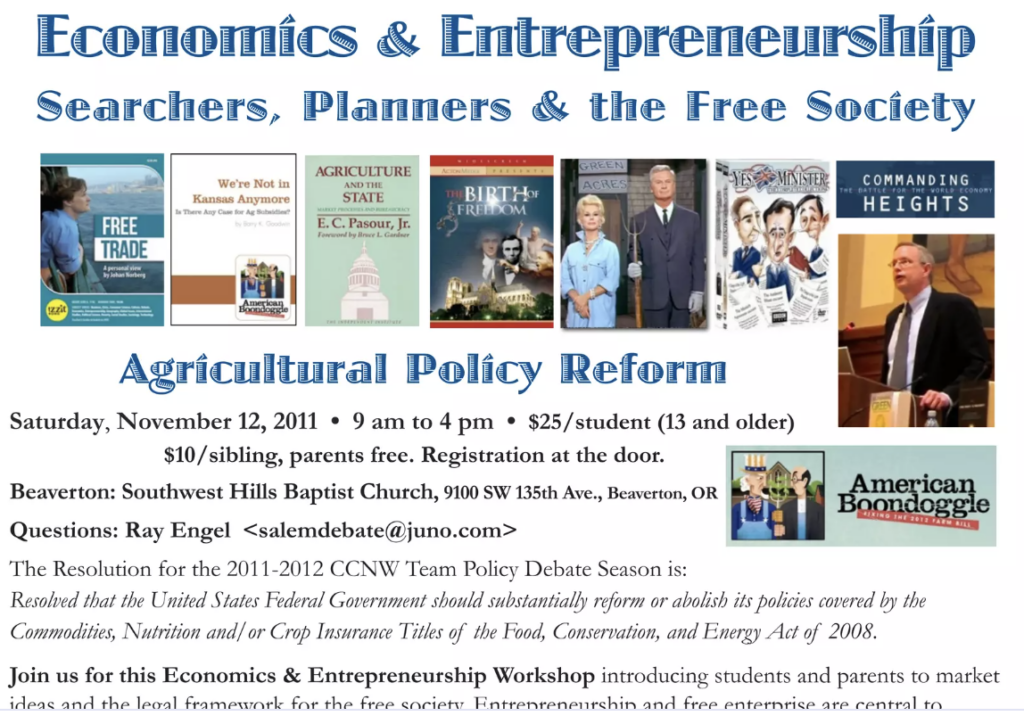
Past Economic Thinking posts:
• U.S. Federal Government Agriculture and/or Food Safety Reform (May 5, 2016)
• Talks from page food safety/agriculture topic: Agriculture Economics One (updated ethos version) and Agriculture Economics Two (updated ethos version)
Infrastructure reform
• Economics of Transportation Infrastructure, Part One (video)
• Paying for Transportation Infrastructure (April 2, 2013) (post)
•