
Rewilding: Prairies and Forests and Bears, oh my…
The National Speech and Debate Association lists current LD, Public Forum, and Policy topics. Below are notes on the November-December Lincoln-Douglas Debate: Resolved: The United States ought to rewild substantial tracts of land.
Many companies and nonprofits focus on restoring or rewilding land. Prairie Restorations, Inc. is one company, profiling client stories on it’s website.
Restoring Native Landscapes, One Seed at a Time.
Since 1977, Prairie Restorations, Inc. has stood as one of the pioneering companies in the United States dedicated to the restoration and management of native plant communities.
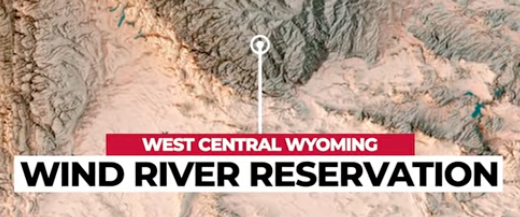
Mutual of Omaha’s Wild Kingdom features the video Rewilding The American Prairie looking at the Wind River Reservation in West Central Wyoming, and efforts to restore American Bison herds.
Where the Buffalo Roam: Rewilding the American Serengeti (PERC, Feb. 11, 2019 and Breakthrough Institute), looks at a major rewilding project:
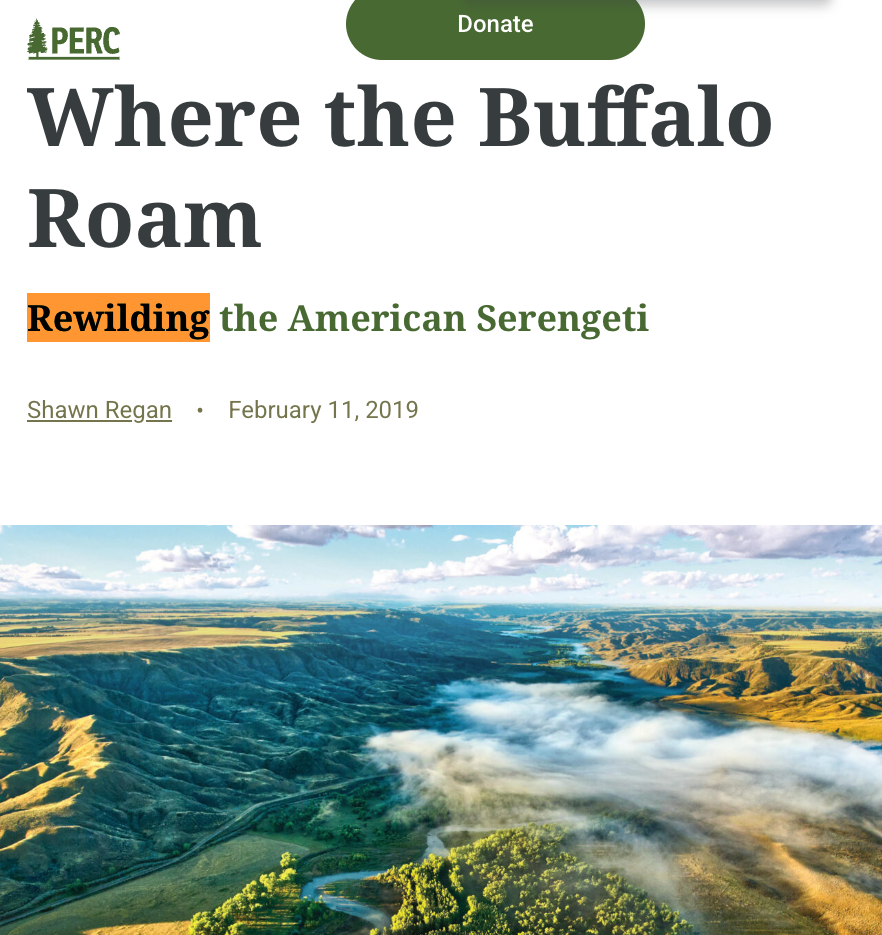
American Prairie Reserve, or APR, a nonprofit conservation organization based in Bozeman, Montana, whose mission is to “create the largest nature reserve in the continental United States.” The reserve, when it’s all said and done, would encompass 3.5 million acres of private and public lands along the Missouri River in northeastern Montana, an area larger than Yellowstone and Grand Teton national parks combined.
Last fall Texas UIL’s LD topic was: agroecology ought to be prioritized over industrial agriculture. Reviewing agroecology led to discussions of regenerative agriculture and ranching. Slides from my UIL Agroecology presentations are here. Protecting the environment, and restoring wilderness and soils engage both nonprofit and for-profit enterprises.

Key to rewilding is restoring the unseen, the The Hidden Half of Nature, which co-authors David Montgomery and Anne Biklé explain are The Microbial Roots of Life and Health. Overview video here: Regenerative Agriculture with David Montgomery | R-Soil REWIND.
Vistas of restored prairie feature diverse plants and shrubs above ground, but hidden below are their deep roots, the rhyzome, supporting trillions of microbes (bacteria, archaea, protists and fungi), that exchange nutrients from the soil for carbohydrates exuded from plants.
See also: Beyond agroecology: Agricultural rewilding, a prospect for livestock systems (Agricultural Systems, May 2022):
Agricultural intensification is a major cause of biodiversity loss. Biodiversity conservation and restoration generally involve human intervention. In comparison, rewilding, a radically different approach to address the erosion of biodiversity, aims to increase the ability of ecological processes to act with little or no human intervention, and thus to enhance biodiversity and the supply of ecosystem services. Rewilding, including that of agricultural systems, has been examined from ecological and social perspectives but rarely from an agricultural perspective.
Carbon Cowboys: Ranching or Rewilding?
In addition to prairie lands restored by companies, environmental groups, and tribes, are fast expanding regenerative farms and ranches, part commercial and part wild. See more in the documentary series Carbon Cowboys profiling ranchers work to duplicate the past American bison herds with dense cattle herds. Are these cattle operation rewilding?
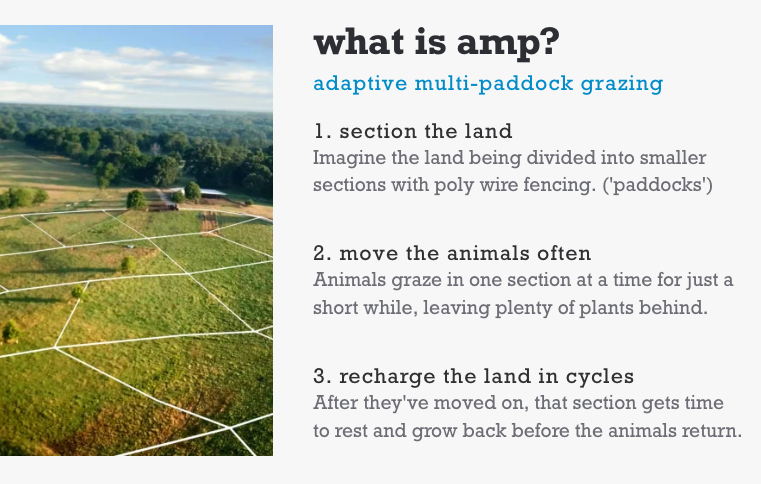
Well, it depends on definitions, but you can watch the videos of adaptive multi-paddock grazing. Instead of cattle left for days on larger paddocks, these ranchers create dozens of small paddocks left to grow wild, and then the dense cattle herd returns for a few hours to graze, fertilize, and break up the soil (“hoof impact”). Other regenerative ranchers add sheep, goats, and chicken (see One Hundred Thousand Beating Hearts video).
This article compares and contrasts: Regenerative Agriculture vs Rewilding: Two Solutions for Ecosystem Regeneration (eatTelfit):
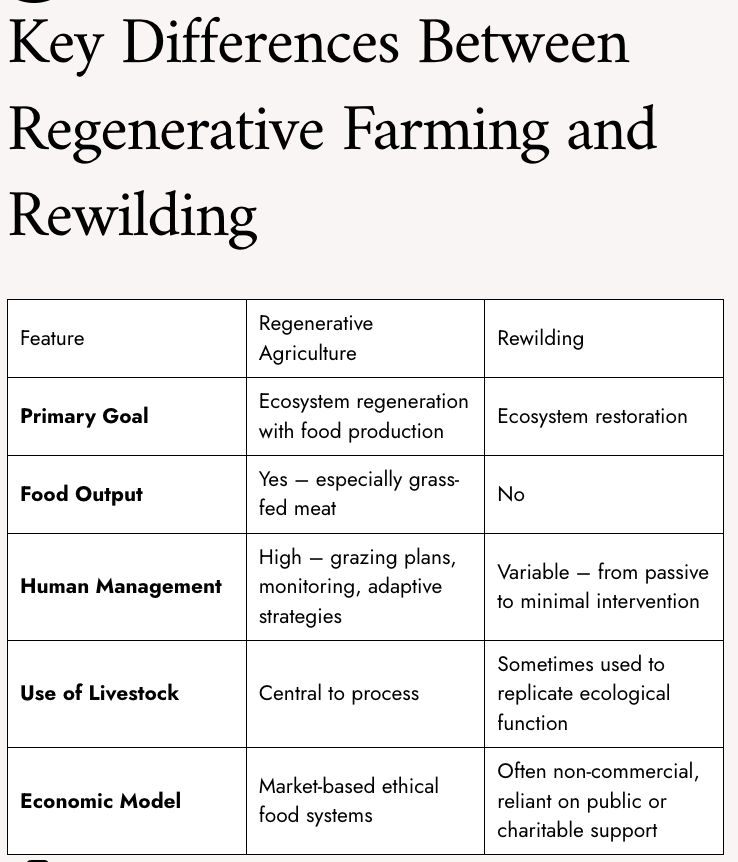
Regenerative agriculture and rewilding are two land-use approaches that are often misunderstood. One produces food, the other doesn’t. But both aim to restore function to ecosystems degraded by decades of extractive farming.
As the UK faces collapsing biodiversity and rising ecological costs from food production, understanding how these systems work—and why they matter—is essential.
Rewilding Can Be Dangerous
Wild bears can accompany rewilding projects, as reported in: Vital rewilding… or utter insanity? Debate rages as freed 800lb killer bears terrorise Italian villages (Daily Mail, 14 September 2024):
The saga over how to handle aggressive bears after the success of a ‘rewilding’ project in the Italian Alps comes at a time when hundreds of other brown bears across Europe – from Sweden to Romania – are being culled.
‘We have lost all our bearings on this issue,’ says environmentalist Francesco Romito. ‘We need to conserve bears for the future but also understand the fears of the local community.’
From National Geographic: Northern Italy’s ‘problem bears’ show the challenges of rewilding carnivores (May 1, 2024).
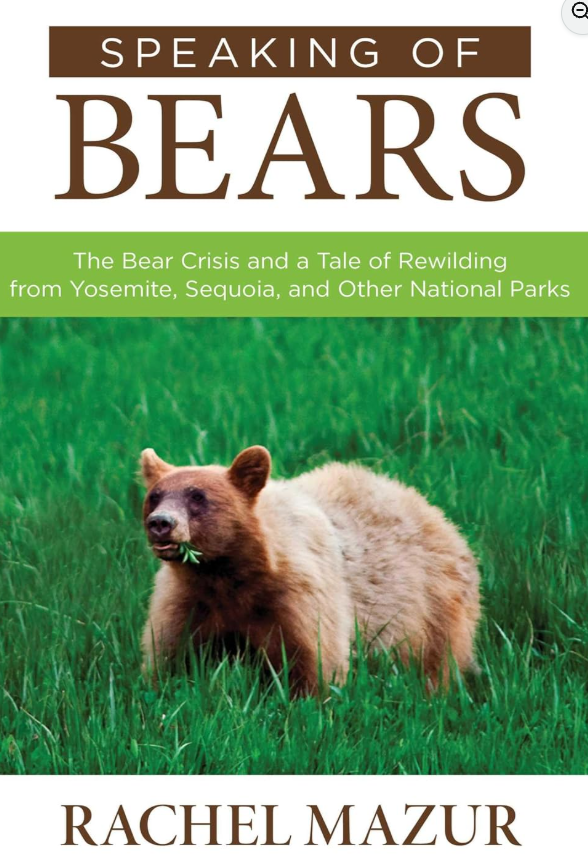
And Speaking of Bears: The Bear Crisis and a Tale of Rewilding from Yosemite, Sequoia, and Other National Parks (2015). Link to book on Amazon, and to review here.
Property Rights, Incentives, and Compensation: Challenges with Wolves
Ranchers losing cattle to wolves are skeptical of nearby rewilding. The challenge is discussed here: Securing a Future for Wolves in the West: Addressing the financial liability, creating an economic asset (PERC Reports, December 6, 2021). Full issue pdf here.
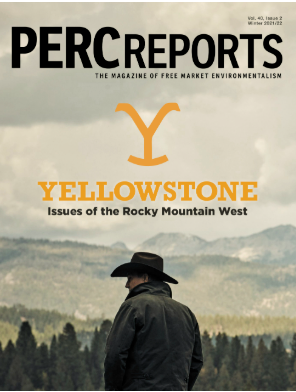
“That’s $1,800 I can’t stand to lose,” rancher Randy Paulson tells Steve Hendon, a livestock agent for the Montana Livestock Association, during Season 2 of “Yellowstone” (Episode 4). Hendon is at the Paulson ranch to investigate a dead cow supposedly killed by wolves. Once Hendon confirms the loss was in fact a wolf kill, he asks Paulson whether he’s called the state wildlife agency.
“They ain’t coming,” Paulson responds, explaining that his neighbor, Jerry Hayes, has a history of hacking up his own cattle and blaming wolves in an attempt to tap into a state program that compensates ranchers for cattle lost to wolf depredation. Hayes’ history of “crying wolf” has poisoned the perception of wildlife authorities, who now hardly believe wolves are even present in the area.
Reforesting the American Northeast (rewilding?)
Scott Welch on Quora:
New Hampshire used to be a fairly agricultural state — in 1800 over 90% of the land was farmed. Now, it’s about 0%.”
It was incredible to see how fast areas regrew. See that forest on the right-hand side of the road? I have home movie from about 1968 of me sledding down that hill, it was a farmer’s field then. 50 years later, it’s a forest.
Forests that have regrown from logging, agriculture, or ranching aren’t the same as earlier old-growth forests. But nature can also alter (smash) forests. Hurricanes have wrecked forests “naturally” over centuries. For example: The Great Hurricane of 1938 (Forest History Society, June 8 2010):
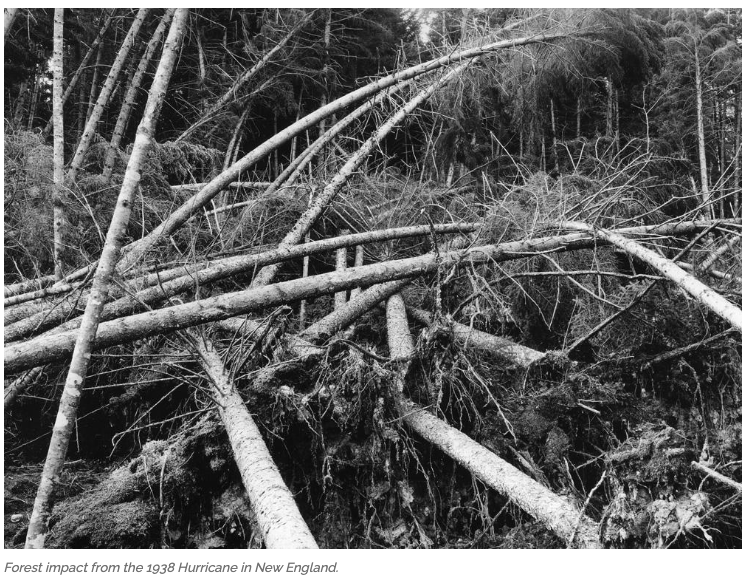
One of the biggest hurricane-induced forest disturbances in the U.S. occurred in New England in 1938. Hurricane number 4 of the 1938 season (Atlantic storms were not given names until 1950), blew a devastating path through the New England region in September of that year, affecting New York, Rhode Island, Connecticut, Massachusetts, Vermont, Maine, and New Hampshire. The storm killed over 700 people, destroyed thousands of homes, and caused forest damage [click to view map] in 35 percent of New England’s total land area.
For more maintaining healthy forests, see Fix America’s Forests (PERC):
A century of fire suppression has disrupted natural fire cycles and impaired forest health. Today, devastating wildfires in the western United States are expanding both in acreage burned and the length of time alight. What the U.S. Forest Service historically termed the “fire season” is now called the “fire year,” which is 70 days longer than a generation ago. As a result, the number of trees dying in national forests is rising as a result of insect infestations, drought, and disease caused by overly dense forests. Likewise, the potential for catastrophic fires is growing as more and more people build homes and live on the forest’s edge.
Rewilding is a challenge to define. Native Americans used fire to manage prairie and forest lands:
In the eastern United States, oak and chestnut trees, dominant in many forests, are the result of targeted burning to achieve specific nut crops. In the Midwest, Native Americans likely cleared and maintained the tall grass prairies of the area for use as herd animal pastureland.
Beavers transformed midwest ecosystems by damming streams. Until French trappers killed millions of beavers, and then ecosystems changed again.
Rewilding is transforming, or allowing nature to transform. But whether man or beavers or pigs or bears, mammals transform (damage or restore?) ecosystems.
Mining and drilling for oil damage ecosystems. The current NSDA policy topic calls for the USFG to increase exploration and/or development of the Arctic. Mostly damage, or the search for knowhow to restore? Maybe USFG could support exploring how to rewild the Arctic (though most of the Arctic is still pretty wild).
Oil and gas drilling causes environmental damage. But that the damage is thousands of feet down, far below the water table. Gravel pits cause environmental damage by blasting, digging, and moving rock, as do all open pit and underground mines. Beavers cause environmental damage when they fell trees and build small dams. Butterflies callously push air around, disrupting their local air ecosystems. Every act of creation causes “damage” in shifting around resources.
All such damage is irreversible in the sense that you can’t step into the same stream water twice. The world flows forward and though environmental changes can usually be restored they can’t be reversed. Each restoration project consumes additional resources. Ecosystems left alone after an intervention develop along a new path that is better or worse in the eyes of outside observers.
The question to all these concerns should be: how much damage, and to whom? Damage to one ecosystem creates openings and opportunities for new adjusted ecosystems. Pinprick blasts deep underground move rock around, allowing oil and natural gas to flow. What’s left after is new and different, but not better or worse. Maybe tiny microbes are blasted, or maybe new microbes move in and multiply after the blasts.

Every fire since the dawn of time has caused irreversible environmental damage. Blame Prometheus.
This was so helpful! A lot of the sources provided were pure gold for my aff and neg case, I just hope that my opponent didn’t read this too….