Exploring the Arctic’s Underground Resources
Part One: Mining Opportunities and Challenges There’s a lot to explore underground across the Arctic. The NSDA policy debate topic calls for the U.S. Federal Government to: significantly increase its exploration and/or development of the Arctic. The Federal Government owns and manages some 60-70% of Alaska’s Arctic territory. High school debate students research and advocate both for and against increased Arctic exploration and development.
Advocates for fossil fuel production want more Arctic land and sea opened for development. Advocates for renewable energy and the “energy transition” generally oppose oil and gas production in the Arctic. But manufacturing windmills, solar panels, and batteries depends on major increases in mining key minerals:
The Arctic holds vital minerals for the renewable energy transition, including nickel, cobalt, copper, platinum group metals, rare earth elements (REEs), lithium, graphite, and aluminum, essential for batteries (Li, Ni, Co, C), wind turbines (REEs, Cu, Al, Steel), and grid infrastructure (Cu, Al)… (AI Overview, Dec. 5, 2025)
• See: The energy transition is sparking America’s next mining boom (The Economist, Feb. 19, 2022) (more mining needed, but behind paywall…)
• Also, Can the Arctic fuel the green transition without harming its people and environment? (NordForsk, Sept. 24, 2025)
• And from the Arctic Economic Council: If we want an energy transition, we must have more mining (March 14, 2023):
In the Arctic region, we can find many of the metals and minerals needed for the green transition. On January 12th 2023, the Swedish mining company LKAB announced that around 700 meters below the ground, they had discovered the largest known deposit of rare earth elements in Europe – a raw material that is it is critical for our transition to new, green technologies but is not currently being mined in Europe.
All across the Arctic, the local communities have for centuries been involved in the mining sector. The region has been mined throughout history to attain the building blocks for a more modern and developed civilisation globally. Yet, people’s understanding of the importance of mining has decreased over time as new mines have been placed in remote and distant locations with different regulatory frameworks than in the Arctic. However, now the world needs Arctic mining again because the region has many of the raw materials needed in the green transition and in places with fair and transparent jurisdictions. …
Mining has become an issue of security but it is also just as much about the future of planetary health; the unavoidable fact is that our sustainable future begins deep underground in a mine. Yet, there were no references to mining in the most recent report of the International Panel on Climate Change (IPCC).
We cannot afford to slow down with mining. It is clear that we are going to need a vast amount of green energy in the future, and for that, we will need a vast amount of critical minerals.
In the coming two decades, we will require a 500% increase in the production of lithium and graphite in order to meet demand. Some people estimate that our activity will necessitate the opening of more than 330 new mines in the near future, and with one mine normally taking more than 15 years to become operational, we have no time to waste.
Extracting Underground Resources and Protecting the Environment
Again, energy transition supporters say new mining is needed and increasing mining in the Arctic can contribute to the the surging US and world demand for these essential minerals. Below is a slide drawing from the AEC’s Arctic Mining Report 2024.
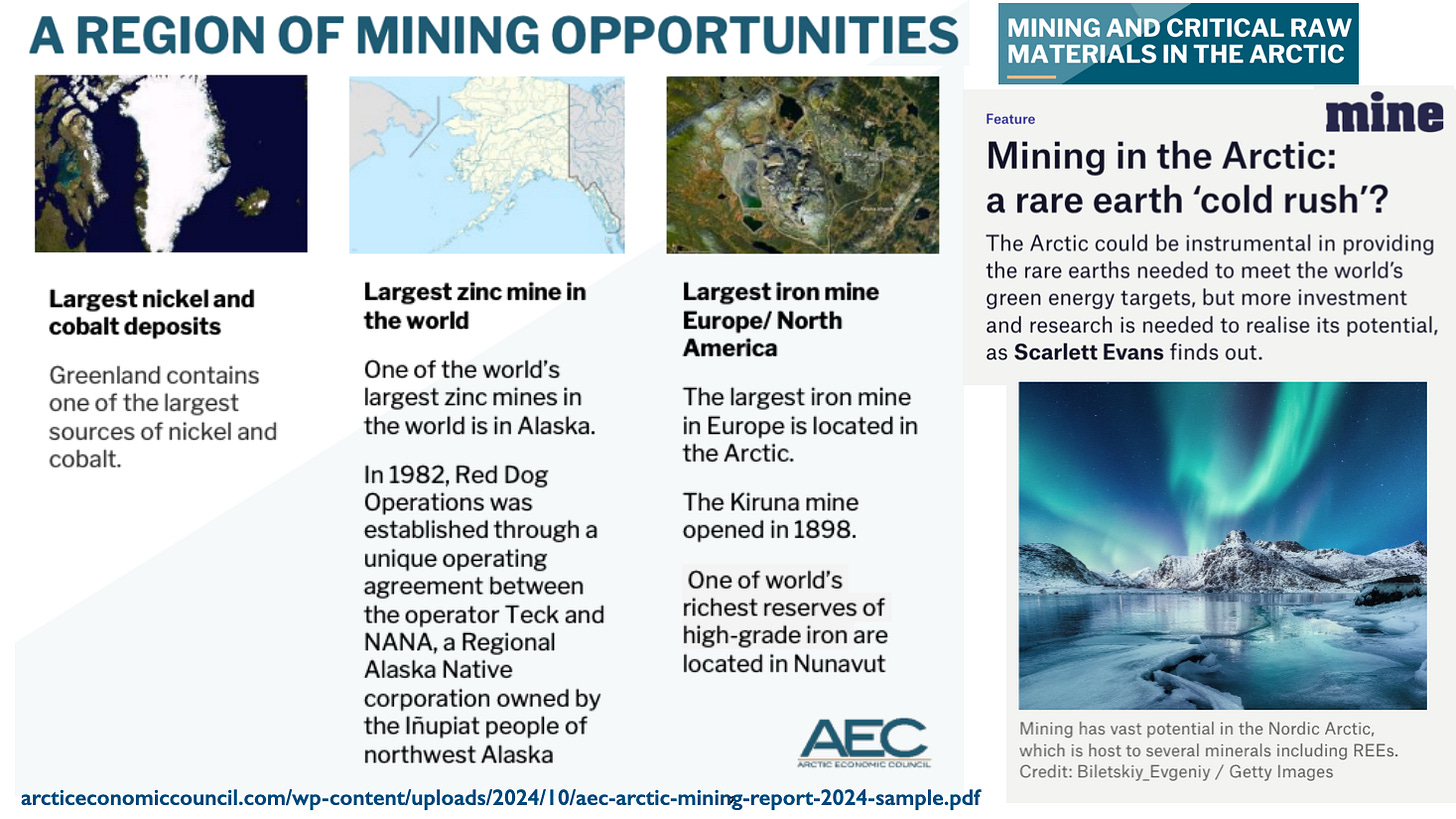
Red Dog mine is the big dog in zinc mining, producing some 4% of global zinc. Zinc is the fourth most used mineral (behind iron, aluminum and copper). From Red Dog Operations page:
In 1982, Red Dog Operations was developed through an innovative operating agreement between the operator Teck and the land-owner NANA, a Regional Alaska Native corporation owned by the Iñupiat of northwest Alaska. The mine and concentrator properties are leased from, and were developed under the agreement with NANA.
But Red Dog is running out of zinc and may shut down. See: Red Dog’s dwindling ore is forcing the entire region to consider its future (Alaska Public Media, June 20, 2024)
Teck Resources (owner of Red Dog but soon to be Anglo-Teck) is exploring for new zinc deposits nearby:
Teck Resources is in advanced exploration on what could be two significant new zinc projects near the existing Red Dog Mine in northwest Alaska.
Red Dog, operated by Canada-based Teck, is the world’s largest zinc mine. NANA Regional Corp. of Kotebue, the regional Alaska Native development corporation, is the land and mineral rights owner.
The new discoveries are Aktigiruq and Anarraaq, on state lands about 10 miles north of the existing mine. Teck has two drilling rigs and soon three at work on exploration drilling this summer and plans to begin construction of an access road in January as well as surface pads to support further work including an exploration adit that will allow underground drilling…
How is the USFG helping Arctic zinc mining? It isn’t. AI Overview reports (drawing from a National Mining Association pdf):
Federal permitting for new U.S. zinc (and other critical mineral) mines faces significant delays, averaging 7-10+ years, due to a disjointed, multi-agency process under laws like NEPA, leading to overlapping reviews, stakeholder input (including litigation), and resource constraints, contrasting sharply with faster systems in Canada/Australia and impacting domestic supply, though efforts like FAST-41 aim to streamline the process for key projects. …
- Multi-Agency Complexity: Multiple federal bodies (BLM, USFS, EPA, Army Corps) and state agencies must approve projects, often with conflicting requirements.
- NEPA Requirements: Preparing Environmental Impact Statements (EIS) under the National Environmental Policy Act (NEPA) is time-consuming.
- Stakeholder & Legal Challenges: Involvement from Indigenous groups, NGOs, and public opposition leads to litigation, increasing risk and uncertainty.
- Agency Resource Constraints: Insufficient staff, funding, and expertise within federal agencies slow down reviews.
- Disjointed Process: Lack of clear leadership and timelines makes the overall process inefficient compared to other nations.
See also this Society for Mining, Metallurgy & Exploration White Paper – Permitting Timelines: Overview Of Federal Permitting Timelines For Locatable Mineral Projects On Public Lands.
Seen and Unseen of Arctic Mining
USFG regulatory and permitting delays serve to divert mining investments to other countries. Zinc will be mined, concentrated, and sold to users, whether mined in the Alaskan Arctic or not. Mining damages the Earth (smashing, moving, and crushing rock), though mining operations can be managed safely and lands restored after.
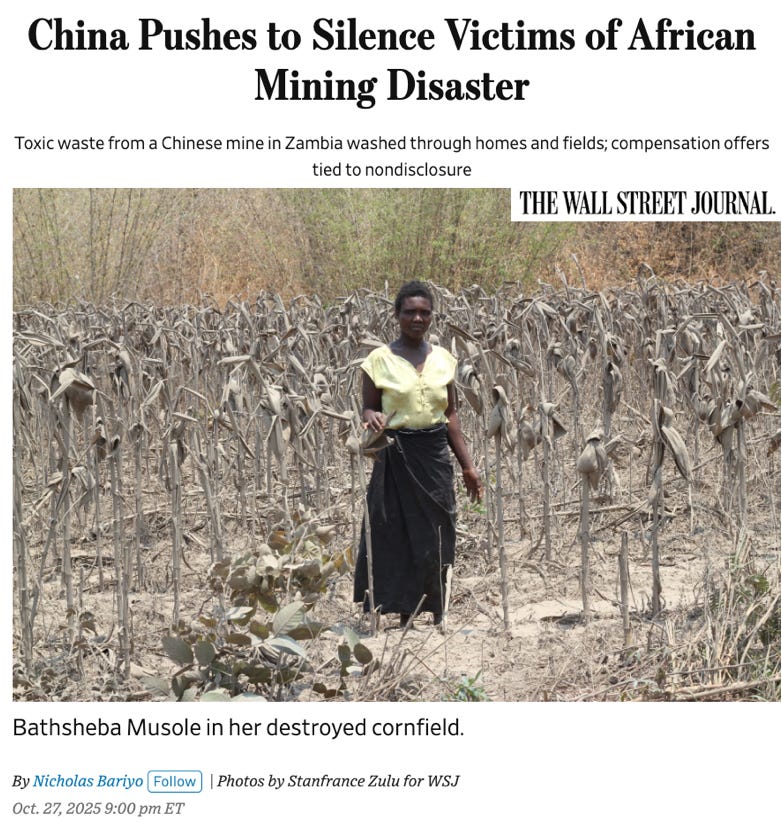
So… environmental concerns over open pit zinc and other mining in Alaska. But if not Alaska, where? Africa? South America? China? Consider the results of poorer governance with a Zambian copper mine: China Pushes to Silence Victims of African Mining Disaster (WSJ, October 27, 2024). To receive $150 compensation: “she would have to agree never to talk about the spill, take legal action against Sino Metals or even reveal the contents of the nondisclosure agreement itself…”
There are many more Alaskan Arctic mining opportunities and challenges. Consider the Ambler Mineral belt where 1,700 active mining claims wait for permits to construct an access road across federal lands. See ENR West article from October, 2025:

Officials believe the district contains cobalt, germanium and gallium, and potentially also copper, zinc, lead, silver and gold.
“This road will help secure the critical minerals our country needs for economic competitiveness and national defense, while also delivering meaningful benefits here at home,”
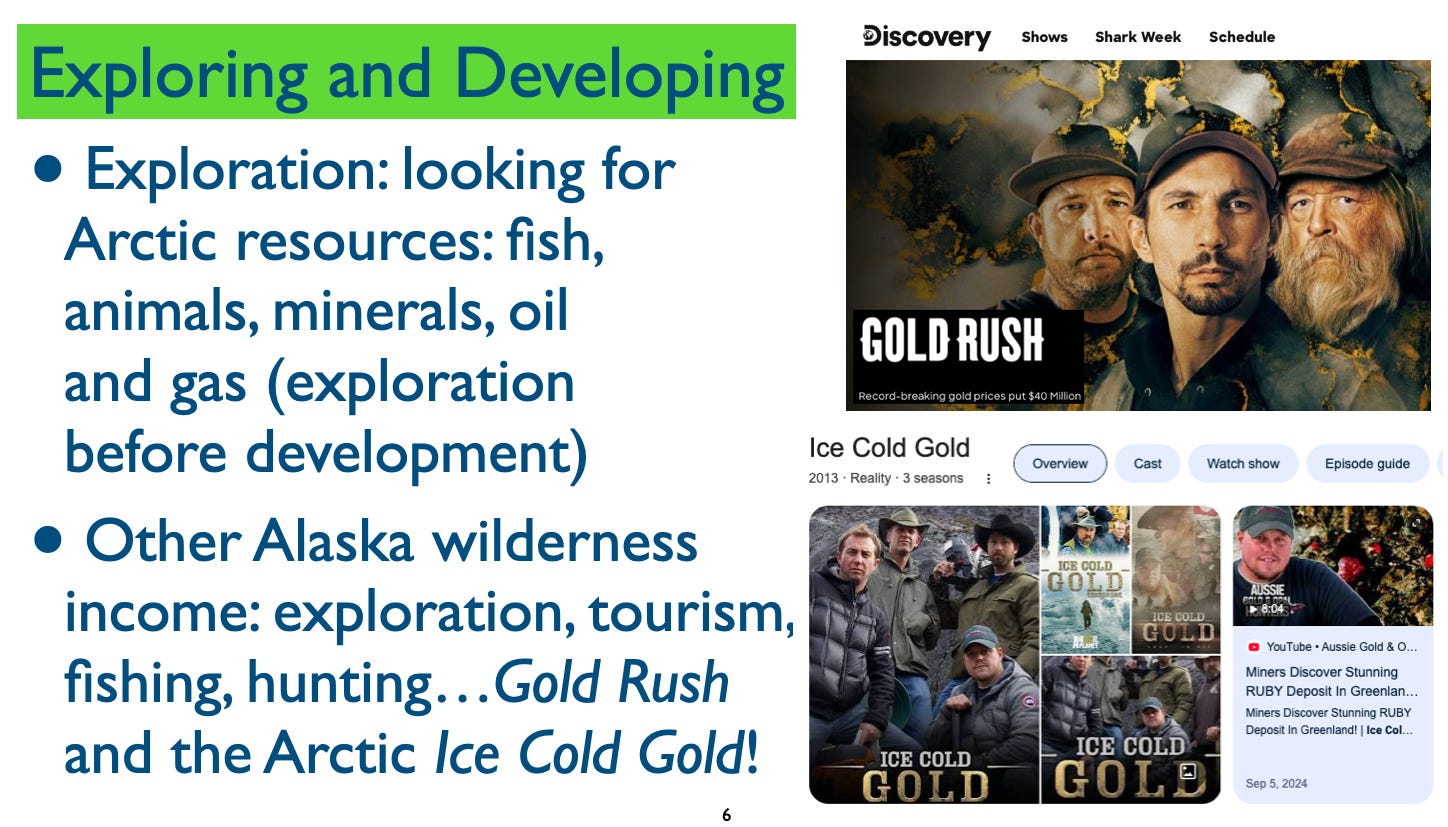
Developing Reality: Don’t Forget Gold Rush and Ice Cold Gold!
For mining minerals in the Arctic, don’t forget gold! How could the USFG significantly increase exploration for gold in the Arctic? Plenty of arguments both for and against. Consider too the entrepreneural opportunities to develop new Arctic reality TV series…