Ending US Funding of Green Energy in Central and South America [updated]
Going forward, it is hard to know which energy technologies will be best able to meet the needs of people and businesses in Central and South America. I’ve long called this the energy race because diverse competing energy technologies compete, cooperate, and advance, sometimes rapidly.
As solar and wind energy production costs fall, they compete with falling natural gas, coal, oil, hydro, and geothermal production costs. Energy reliability is key, so falling battery and other energy storage costs help wind and solar compete with fossil fuel and hydro energy. Solar energy has great advantages in rural areas, far from access to electricity grids.
Pollution matters as well, so advancing pollution reduction technologies for natural gas, oil, and coal energy compete with new technologies to reduce pollution from mining and manufacturing needed for wind mills and solar panels.
Land Use
Wind and solar energy plants require far more land than natural gas, nuclear, and coal plants, and are often distant from cities, so require costly transmission infrastructure. The exception is rooftop solar for homes, warehouses, retail, and parking lots. However these require additional technologies to integrate into the grid, and require battery or other back up power to insure reliable power.
It’s good news that energy production, transportation and storage technologies advance, but it still leaves the question of which energy sources are best for Central and South America.
With market and mixed economies, entrepreneurs and enterprises, backed by investors, make the decisions on which energy technologies to pursue. Build outs of new energy sources require regulatory review and approval from state authorities, but international NGOs and agencies weigh in as well, with loans and subsidies for preferred energy sources and technologies.
Google Search Labs AI Overview reports:
Several U.S. agencies are actively promoting renewable energy in South America, including the U.S. Agency for International Development (USAID), the U.S. Trade and Development Agency (USTDA), and the Department of Energy (DOE). These agencies are involved in various initiatives such as providing financial support for clean energy projects, offering technical assistance, and fostering partnerships to advance the region’s transition to renewable energy sources.
Specific agencies and their roles:
- USAID: Supports private-sector clean energy development through initiatives like the Clean Energy Finance Facility for the Caribbean and Central America (CEFF-CCA), which provides grant support for early-stage project development.
- USTDA: Offers project development support, including grants and technical assistance, and helps connect projects with financing opportunities like loans and insurance from other U.S. government partners.
- DOE: Collaborates with international partners to advance clean energy technologies and policies, including those related to energy efficiency and renewable energy.
USAID has been cut by Doge and the Trump Administration, but other federal agencies still support “energy transitions” across Central and South America. Some, like CAF -development bank of Latin America and the Caribbean
Here is where current US policies and programs engage (interfere?) with private sector energy enterprises:
CAF -development bank of Latin America and the Caribbean – approved USD 2,478 million for 10 countries in the region, which will be used to create resilient infrastructure, accelerate the energy transition, increase productivity and improve urban mobility, environmental sustainability and water and sanitation systems. Source: CAF approves USD 2.478 billion for sustainable development in Latin America and the Caribbean (Dec. 5, 2024).
And: CAF approves USD 5.2 billion for sustainable development and incorporates two new countries (June 29, 2025).
So while Congress and the Trump Administration are working to cut wind and solar subsidies and mandates in the U.S, it is unclear if US policies promoting similar wind and solar energy projects across Central and South American will be curtailed.
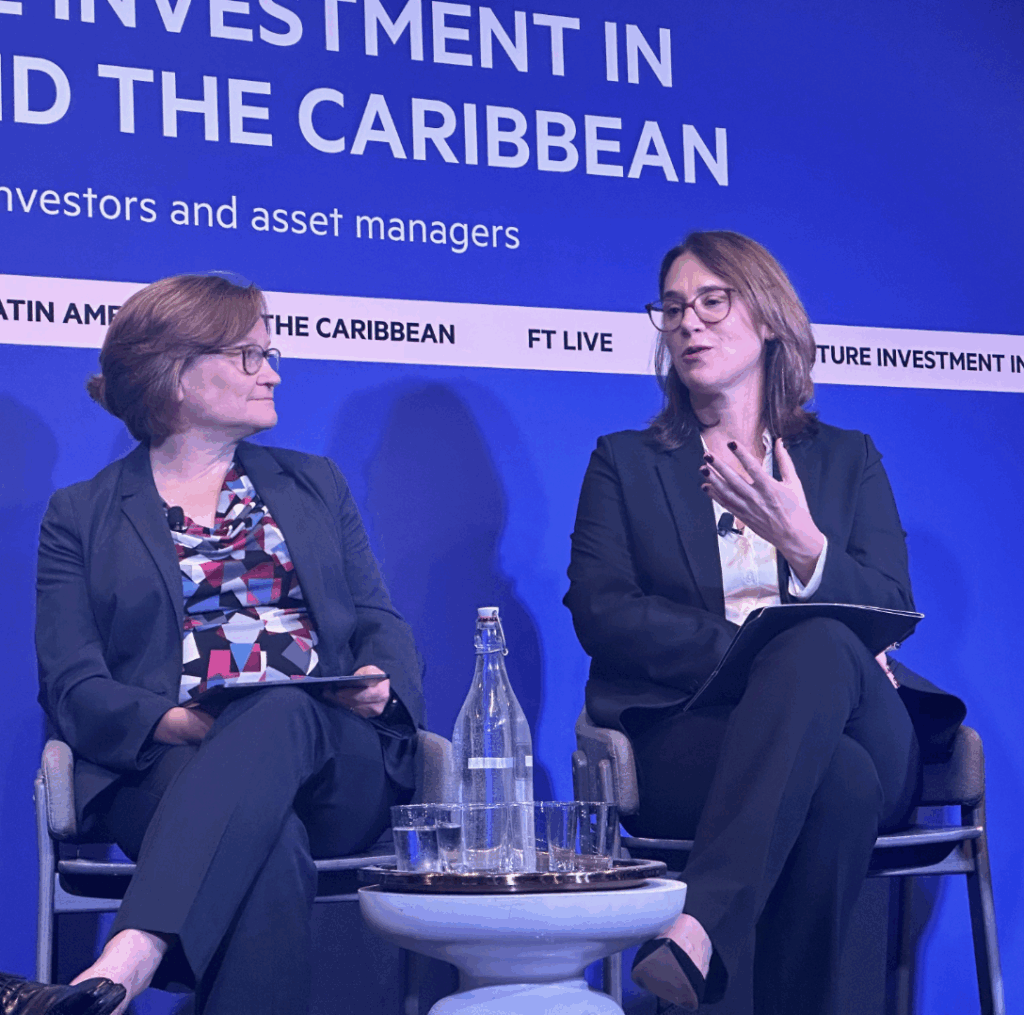
“CAF is seeking to become the Green Bank of Latin America and the Caribbean, and to achieve this goal, we are committing to increase our green financing by 40% by 2026,” said Claudia Flores, General Manager of Portfolio Management, Private Sector Vice-Presidency at CAF. (X post reporting on panel ‘How are multilateral organisations using debt funds to build the region’s infrastructure?’ at the “Infrastructure Investment in Latin America and the Caribbean”
The Natural Resource Defense Council (NRDC) provides an overview in Promote Clean Energy in Latin America
Several U.S. agencies are actively promoting renewable energy in South America, including the U.S. Agency for International Development (USAID), the U.S. Trade and Development Agency (USTDA), and the Department of Energy (DOE). These agencies are involved in various initiatives such as providing financial support for clean energy projects, offering technical assistance, and fostering partnerships to advance the region’s transition to renewable energy sources.
Trade offs in energy production transitions…
Promotion of and investment in “the energy transition” usually comes at the expense of investing in traditional (natural gas, coal, hydro) energy sources that in most cases are less expensive to deliver to factories, business, and consumers.
Rich countries like the United States and in Europe have far more disposible income to support renewable energy technologies. Even though most (nearly all) of increased carbon dioxide emissions are from new coal plants in China and India. Google’s AI Overview reports:
In 2023, China and India were significant contributors to new CO2 emissions, with China being the largest emitter and India surpassing the European Union to become the third largest. China’s emissions exceeded those of all advanced economies combined. While China’s per capita emissions are higher than the global average, India’s remain below it. Both countries are heavily reliant on coal for energy, contributing significantly to their emissions.
In 2023, China was the world’s largest emitter of CO2, accounting for 35% of global emissions. Their emissions were 15% higher than those of advanced economies combined.
India’s Rise: India has become the third-largest emitter, surpassing the European Union.
Coal Dependence: Both China and India rely heavily on coal for energy production, which is a major source of CO2 emissions.
Per Capita Emissions: While China’s per capita emissions are higher than the global average, India’s remain below it.
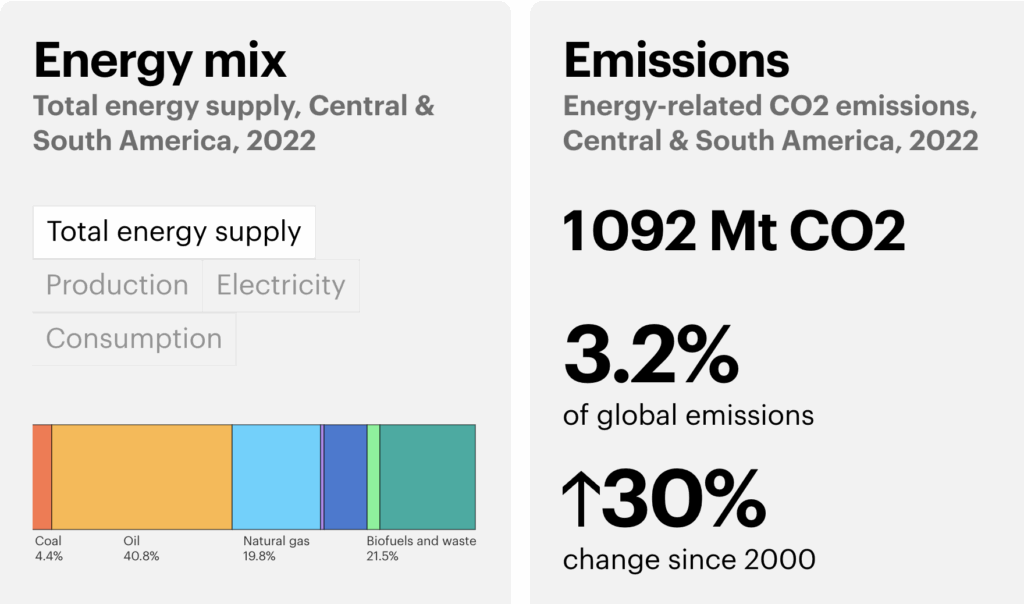
The International Energy Agency (IEA) provides overview of Energy system of Central & South America
While China is the largest global emitter of carbon dioxide, and India the third (surpassing the European Union), the United States second, Central and South America emitted far less, just 3.2% of global emissions.
U.S. energy policies now promoting green/renewable energy policies and program shouldn’t do so at the expense of everyday Central and South Americans struggling to make ends meet. If new technologies lower the price and increase the availability of electricity, that’s a good thing. But if they instead raise costs to consumers and businesses (and/or reduce reliability), pushing these programs seems more likely to hurt people as well as be costly for US taxpayers.
More recently (August 7, 2025) is South American Cold Underscores Role of Oil and Gas:
Any attempt to derail South America’s progress in the energy sector must be met with fierce opposition from policymakers and the public alike.
The Antarctic cold wave was a reminder of both nature’s unpredictability and the continent’s potential. With courage and clarity, the region can harness its oil and gas wealth to build a future where no one is left in the cold – literally or economically.
And in the news: BP’s biggest find in 25 years spurs Brazil’s 2025 auction